
Join Philip as he takes us on an exciting journey through history and legends, revealing the beauty of the giant carvings that shape the land, in his guide to the White Horses of Wiltshire 🐎
And below, you’ll find an interactive map of the White Horses of Wiltshire to make the journey even more exciting 🗺️
A few summers ago, my brother and I pitched our tent at the base of the White Horse of Uffington on Midsummer’s Eve 🐎
It was a proper adventure of the classic kind ⛺
Pristine camping vibes, and rare peace… not even a single squabble with my usually feisty older brother.
We stayed up late into the warm, star-filled night, and woke early to the sound of hooves.
We poked our heads out of the tents, watching in awe as two riders galloped gracefully across the green hill,
while the giant chalk horse gleamed in the first light of dawn 🌄
Like I said… it was a proper adventure.
This trip sparked a deep fascination in me for Britain’s mysterious White Horses.
And the strangest part? I discovered that most of them, unlike the ancient symbols, monuments, and burial mounds scattered across these islands, aren’t nearly as old as people think… 👀
So… what exactly are the “White Horses”? 🐎
Alright, here’s a shorter, streamlined version without losing any meaning 👌
The term “geoglyph” refers to a man-made pattern or symbol carved directly into the ground,
from “geo” meaning Earth and “glyph” meaning carved figure. The most famous examples are the Nazca Lines in Peru, but similar designs exist all around the world 🌍
People often associate geoglyphs with ancient civilizations, but that’s not always the case.
A clear example is the White Horses of Britain, relatively modern ground carvings despite their rich symbolism, with the Uffington Horse standing in a league of its own.
Officially, there are 16 White Horses carved into Britain’s hills, but unofficially the number is almost double.
That’s because White Horses need constant care; without regular cleaning and cutting—known as “scouring”—their details fade and blend into the hills 🐎
And here lies their true magic; a symbol of coexistence between nature—the horses—and the local people. Most villages with White Horses have an annual cleaning tradition as part of their local festivals, like an unwritten agreement: the village cares for the horse, and the horse, in turn, preserves the spirit of the village through the years.
And since Britain is a horse-loving country, it has more horse geoglyphs than anywhere else in the world.
But there’s one place that stands above them all…
Wiltshire 👀
The White Horse of Uffington… the Original and the Beginning 🐎
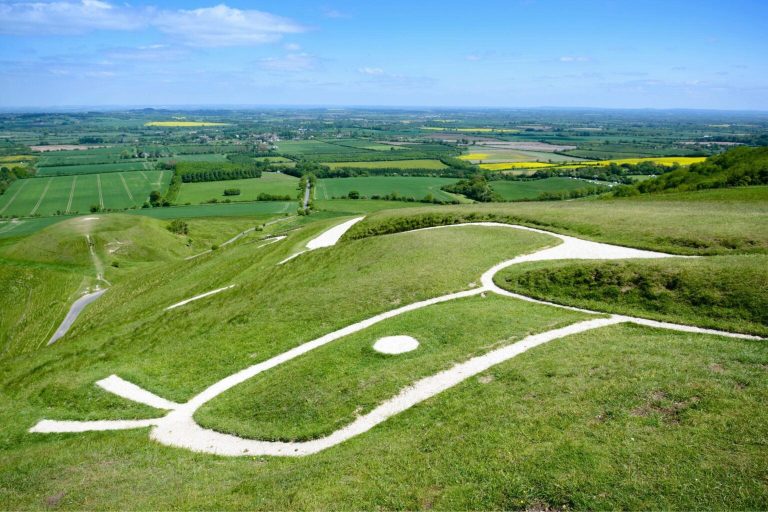
You can’t talk about the White Horses of Wiltshire without mentioning the White Horse of Uffington, just over the border in Oxfordshire.
The Uffington Horse is the original… Britain’s very first White Horse 🐎
It sits on the Berkshire Downs and can be seen from almost twenty miles away.
It stretches over a hundred meters long, is estimated to be around three thousand years old, and is one of the oldest and most remarkable geoglyphs in the world.
There are countless stories about the meaning of the symbol;
some link it to the ancient Ridgeway, Britain’s oldest road.
It may have been a status symbol for a local chief or lord, or a giant spiritual totem for Britain’s pre-Christian peoples.
Some say the horse will grant wishes if you stand on its eye and turn around three times.
Others believe it to be the final resting place of King Arthur.
One of the most famous legends says it’s not a horse at all, but a dragon 🐉
and the hill marks the spot where St George slew the beast.
Dragon Hill, in the shadow of White Horse Hill, has a flattened top where grass never grows—legend says it’s because the dragon’s blood scared the ground forever.
Whatever its age or original meaning, it’s impossible to deny that the White Horse of Uffington is a masterpiece of simple, elegant Celtic art.
Up close, it looks like just a series of lines cut into the turf,
but step back a little, and the horse seems to gallop right out of the hills, as if it were alive ✨
Why are there so many White Horses in Wiltshire? 🐎
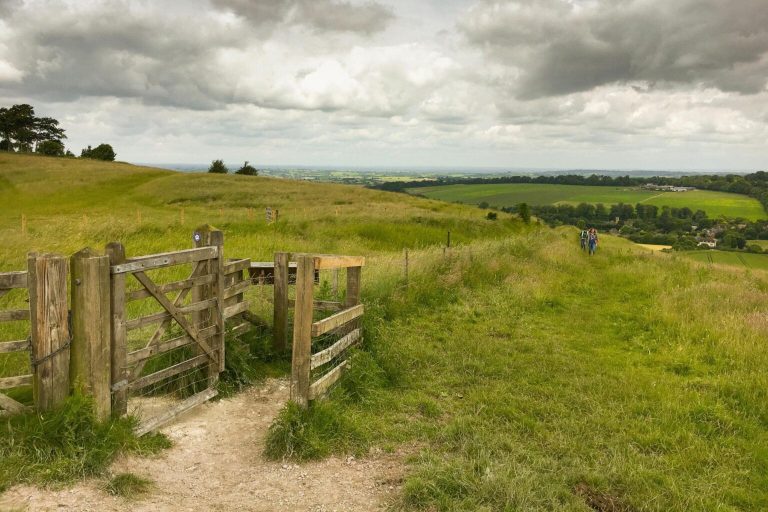
While Uffington is remarkable, it’s just the beginning of the story.
After my Midsummer adventure with my brother, I discovered there are many more White Horses waiting to be found 🐎
Of the sixteen horses I mentioned, eight are visible in Wiltshire, while five more have faded back into the hills.
Without a doubt, Wiltshire has more White Horses than anywhere else in Britain.
Why? It’s most likely due to the county’s chalky soil and wide, rolling hills.
The chalk creates a stark, powerful silhouette, almost like a ghost, visible from miles away.
However, most of them are smaller than Uffington, and without knowing where to look, you could easily drive past them.
That’s why the best way to see the White Horses of Wiltshire is on foot 🥾
After our Midsummer adventure, I walked part of the White Horse Trail, about 90 miles, which lets you see all eight horses up close.
If you have the time, you can complete the full trail in 7 to 9 days.
The circular trail also passes other historic sites, like the Avebury Stone Circle (we recommend it over Stonehenge—firstly, it’s free!) and, of course, the Ridgeway.
If you want to see the White Horses of Wiltshire, this trail is definitely the way to go.
A Rough Guide to Exploring the White Horses of Wiltshire 🐎
Now let’s talk a little about the horses themselves.
Each horse has its own distinct history and style, which makes exploring them so interesting and exciting 🐎
From oldest to newest, the eight remaining White Horses of Wiltshire are as follows:
Westbury (circa 1600s) 🐎
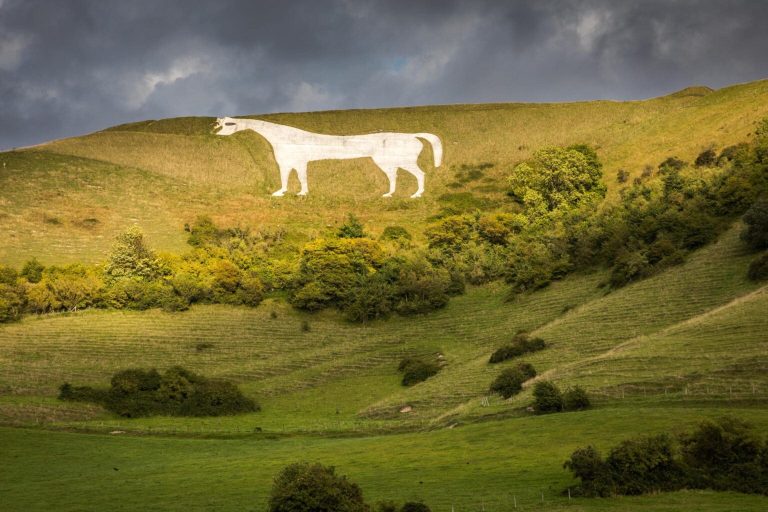
The oldest of the eight, the Westbury Horse can be found on Westbury Hill, Bratton Down. 🐎
Considered one of the most picturesque White Horses, but interestingly, it’s not made of original chalk, and its current design isn’t the original.
The original version is thought to have commemorated the Battle of Ethandun, but in 1778, the steward of the land felt it didn’t look much like a horse, so it was re-cut.
It was cut again in 1873, and in the 1950s, they decided the yearly cleaning had become too costly, so it was covered in concrete.
And in 1996, they did the same again, painting the concrete white to preserve its iconic color.
Cherhill (1780) 🐎
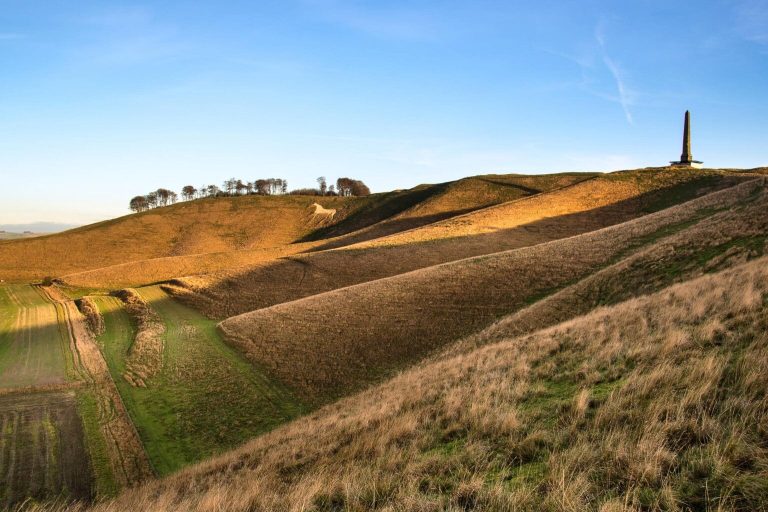
The Cherhill Horse is located on the edge of Cherhill Down 🐎
It’s said that its design was inspired by the Westbury Horse, as it was cut just two years after Westbury’s redesign.
It was commissioned by Dr. Christopher Alsop of Calne, sometimes known as “the mad doctor.”
Legend has it that he stood on the opposite hill, shouting instructions through a megaphone.
The eyes were originally made of glass, with several upside-down bottles buried to reflect the light,
making the horse appear alive and gleaming from afar.
Sadly, none of these bottles remain today, believed to have been taken as souvenirs.
Marlborough (or Preshute – 1804) 🐎
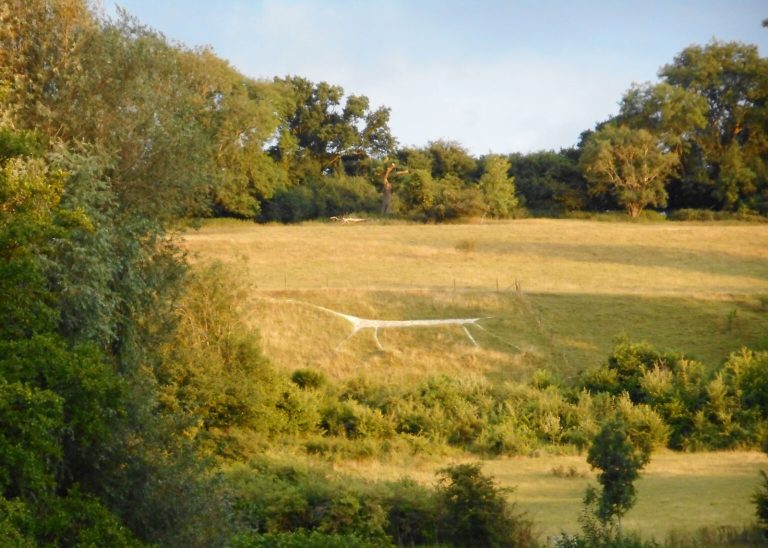
The Marlborough Horse sits above the village of Preshute, southwest of Marlborough 🐎
This horse is smaller than most of the others and often hard to spot due to the surrounding trees.
Sweetly, it was originally cut by pupils of a local boys’ school in the 1800s, and recently restored by members of the local Scout club.
Alton Barnes (1812) 🐎
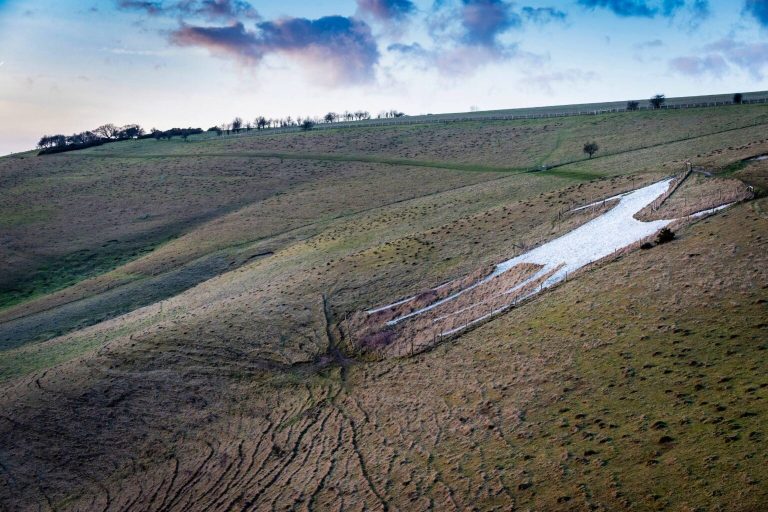
The Alton Barnes Horse sits on Milk Hill, just north of Alton Barnes village, overlooking Pewsey Vale and the new Pewsey Horse 🐎
You can see the horse from miles around, but the best views are often from within Alton Barnes village itself.
There’s a charming tradition of lighting the horse with candles on special occasions like solstices and other important dates, such as its 200th anniversary in 2012.
Hackpen (1838) 🐎
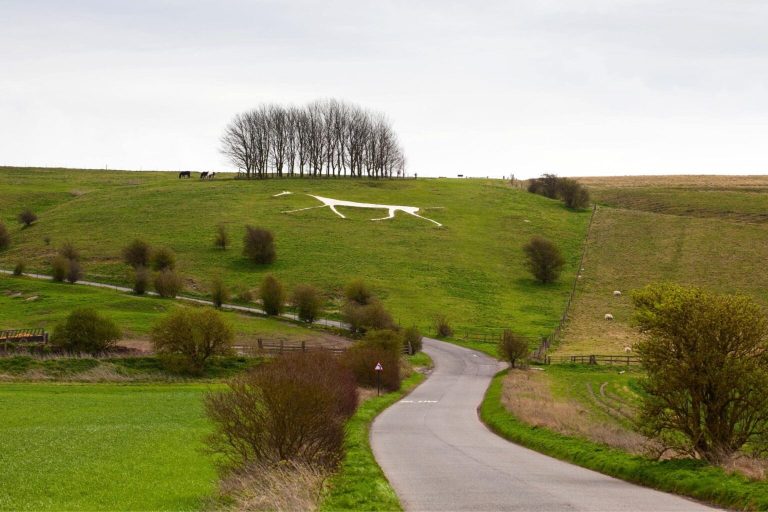
The Hackpen Horse is located on the Ridgeway at the edge of Marlborough Downs, southeast of Broad Hinton village 🐎
The most likely story of Hackpen’s origin is that it was cut to commemorate Queen Victoria’s coronation, by Henry Eatwell, a parish clerk, with the help of an unnamed local pub landlord.
Classic Wiltshire!
Broad Town (1864) 🐎
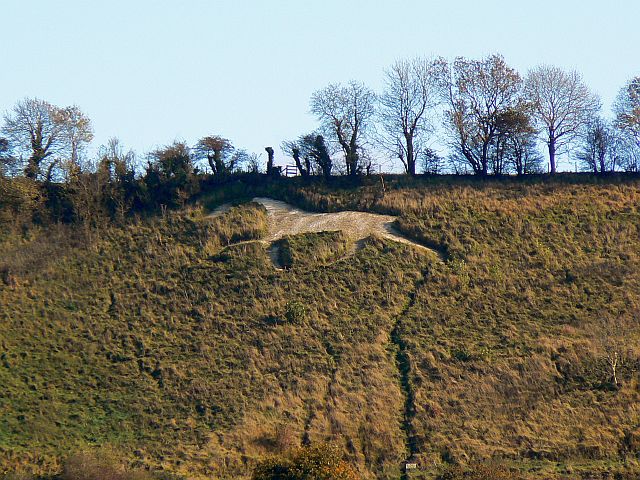
South of Royal Wootton Bassett lies a White Horse believed to have been the passion project of the local farmer at the time 🐎
However, for most of its history, the horse was largely forgotten and neglected.
Things changed in 1991, when a local society was formed to restore and regularly scour it.
Thanks to the hard work of dedicated volunteers, the Broad Town White Horse has been given a new lease on life.
Pewsey (1937) 🐎
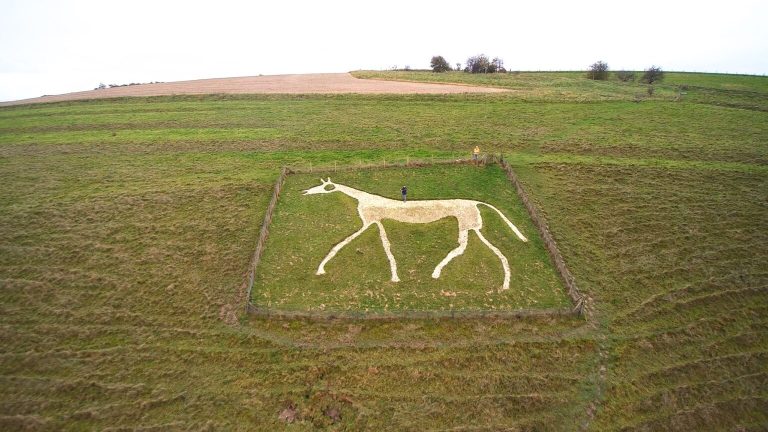
The Pewsey Horse, south of Pewsey village, stands very close to the site of an older horse that has sadly been lost 🐎
Like many of Wiltshire’s horses, it was carved to commemorate a king’s coronation—in this case, George VI—by members of the Pewsey Fire Brigade.
Despite its smaller size compared to the other horses, it’s described as a well-proportioned and faithful representation of a real horse.
Devizes (or Roundway – 1999) 🐎
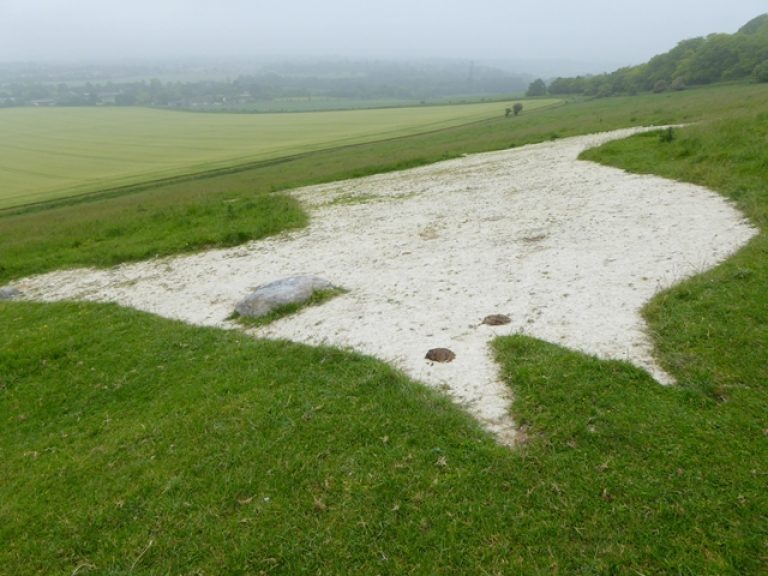
The newest of the Wiltshire Horses is the Devizes White Horse, located on Roundway Hill, overlooking the hamlet of Roundway 🐎
The unique thing about it is that it’s the only one of the eight facing to the right.
The Devizes Horse was cut to celebrate the millennium, and like Pewsey, it stands on the site of an older, now-lost White Horse.
And, as with Alton Barnes, there’s a lovely tradition of lighting the horse with candles on special occasions.
The iconic White Horses of Wiltshire are an enduring part of the region’s cultural heritage and a compelling reason to explore this unique land 🐎
Carved into the chalky hills, these figures aren’t just for decoration;
Carved into the chalky hills, these figures aren’t just for decoration;
A Journey Through the White Horses of Wiltshire: Every Location and Landmark 🐎✨
📍 Westbury White Horse
Postcode: BA13 3EP
Note: On the highest hill and the oldest carving in the area 👀
📍 Cherhill White Horse
Postcode: SN11 8XY
Note: It was carved about two years after Westbury
📍 Alton Barnes White Horse
Postcode: SN9 5PS
Note: On Milk Hill, and the village view is stunning 👌
📍 Pewsey White Horse
Postcode: Near SN9 5AF
Note: South of Pewsey village 🐴
📍 Devizes White Horse
Postcode: SN10 3JU
Note: On Roundway Hill, and the only one facing right 🎯
📍 Hackpen White Horse
Postcode: SN8 1RE
Note: On the edge of Marlborough Downs near Broad Hinton
📍 Broad Town White Horse
Postcode: SN4 8JN
Note: South of Royal Wootton Bassett 🐎
📍 Marlborough White Horse
Postcode: SN8 4DG
Note: Among small hills and trees 🌿


Comment (0)