
The Donard Park to Slieve Donard trail offers a challenging and deeply rewarding ascent to Northern Ireland’s highest point. Slieve Donard (Irish: Sliabh Dónairt) is the tallest peak of the Mourne Mountains and is located near Newcastle, County Down.
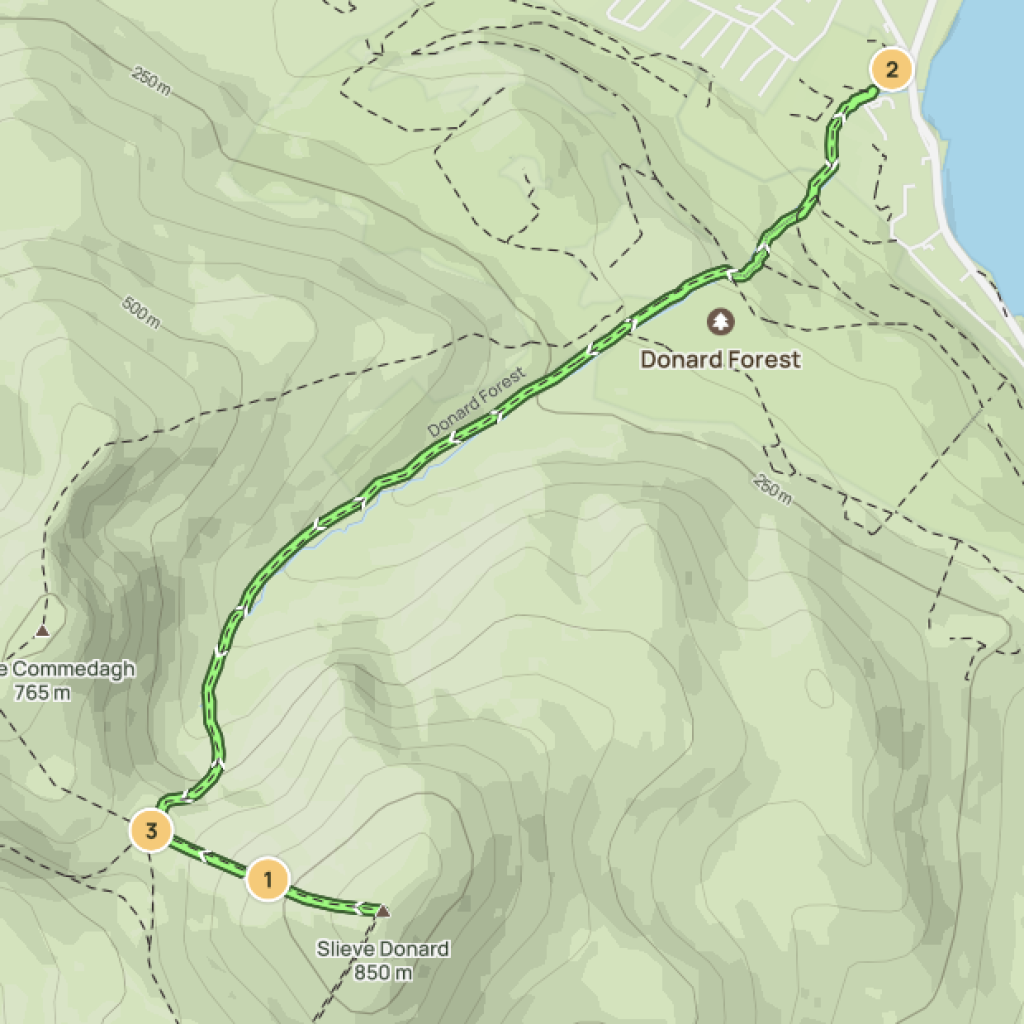
I chose this explore for its blend of strenuous outdoors activities, spectacular views overlooks the Irish Sea, and rich historical and mythological significance. This is a must-do climb for any contemporary adventurer.
Key Takeaways
- My Core Activity: A strenuous, high-altitude mountain hike and historical explore.
- The Route’s Distance: A significant out-and-back trail, estimated to be around 6–7 miles return.
- Key Landmarks: Slieve Donard summit, Mourne Wall, Donard Car Park, and the Irish Sea views.
- The Path’s Surface: Rocky in places and features well-maintained trails. Expect some mud and less stable footing after rain.
- My Rating: Strenuous, due to the sustained incline to the highest point in Northern Ireland.
The Full Loop: My Climb to Northern Ireland’s Highest Point
My hike on the Donard Park to Slieve Donard trail began at the Donard Car Park, which offers convenient parking facilities. I made sure to arrive early, as the area will be popular on weekends.
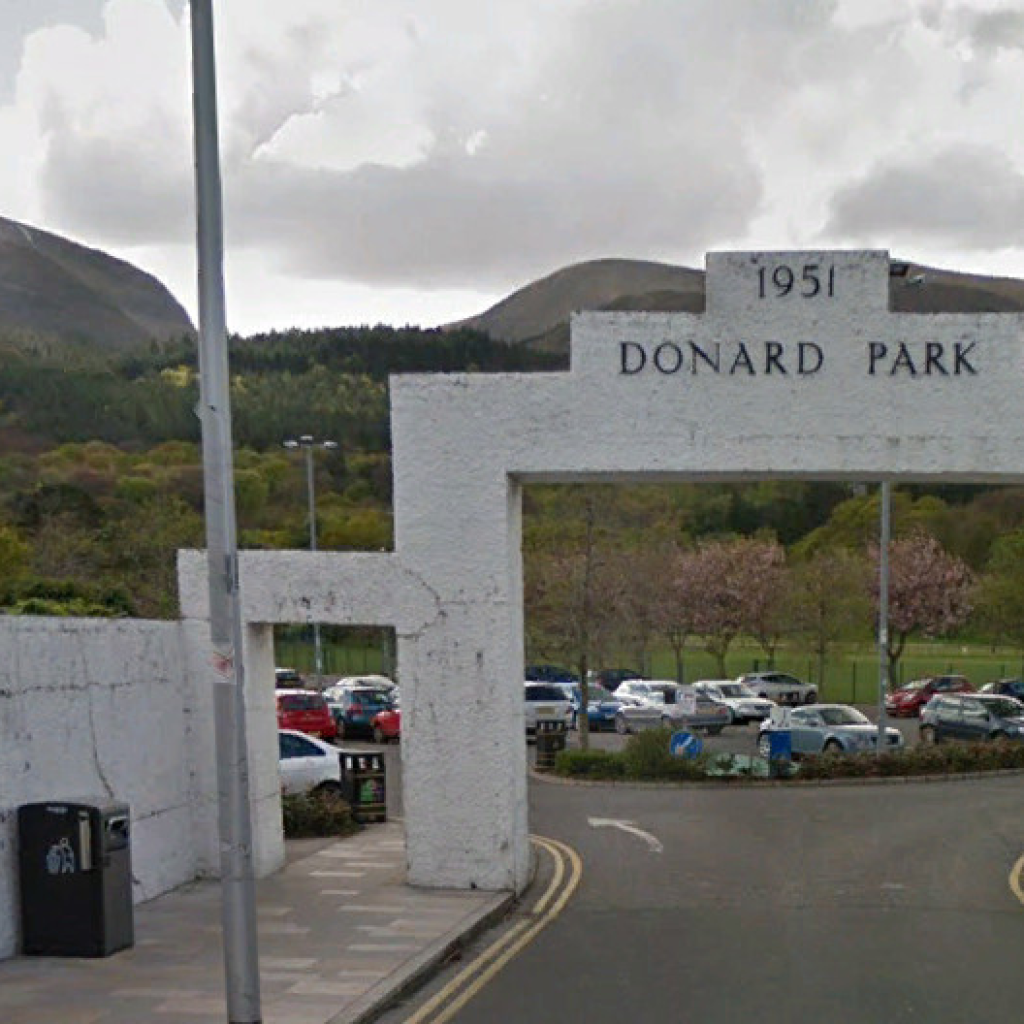
The route immediately leads you into a beautiful landscape of wide valleys and flowing rivers. The trail is renowned for its spectacular views as you ascend, including the vast expanse of the Irish Sea. This level of grand, exposed mountain hiking is comparable to the ascent of Ben Lomond Mountain Path in Scotland, offering sustained elevation gain and far-reaching views. [Internlink Suggestion: The sustained elevation and expansive views are comparable to the ascent of Ben Lomond Mountain Path in Scotland.]
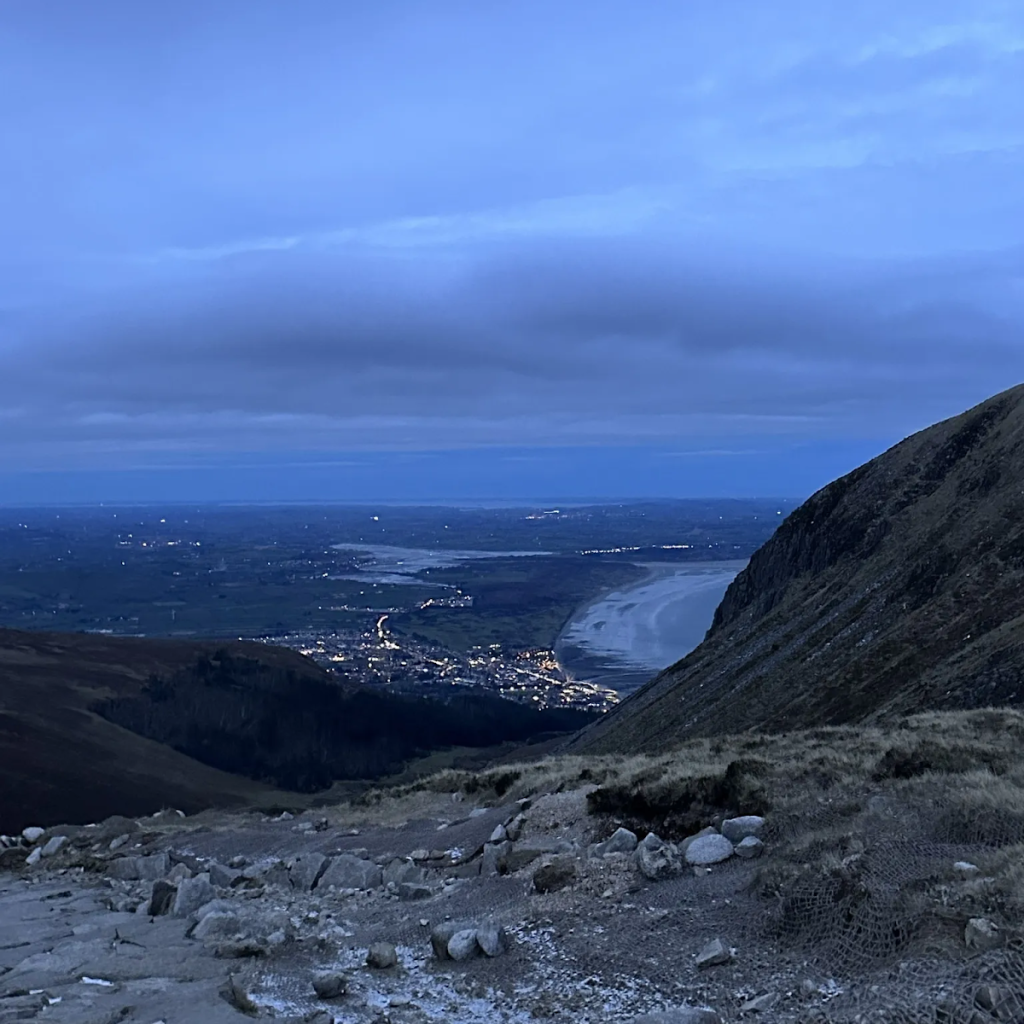
I found the trails well maintained. However, the path is rocky in places, so I was glad I was prepared with suitable footwear such as boots or sturdy walking shoes. As with most routes, I had to expect some mud and less stable footing after rain. It is often windy on the way, so bringing clothing that suits the conditions is essential.
Near the summit, you can see the Mourne Wall, which climbs the western and southern slopes and connects to a tiny stone tower at the top. The peak also holds the ruins of two ancient burial cairns.
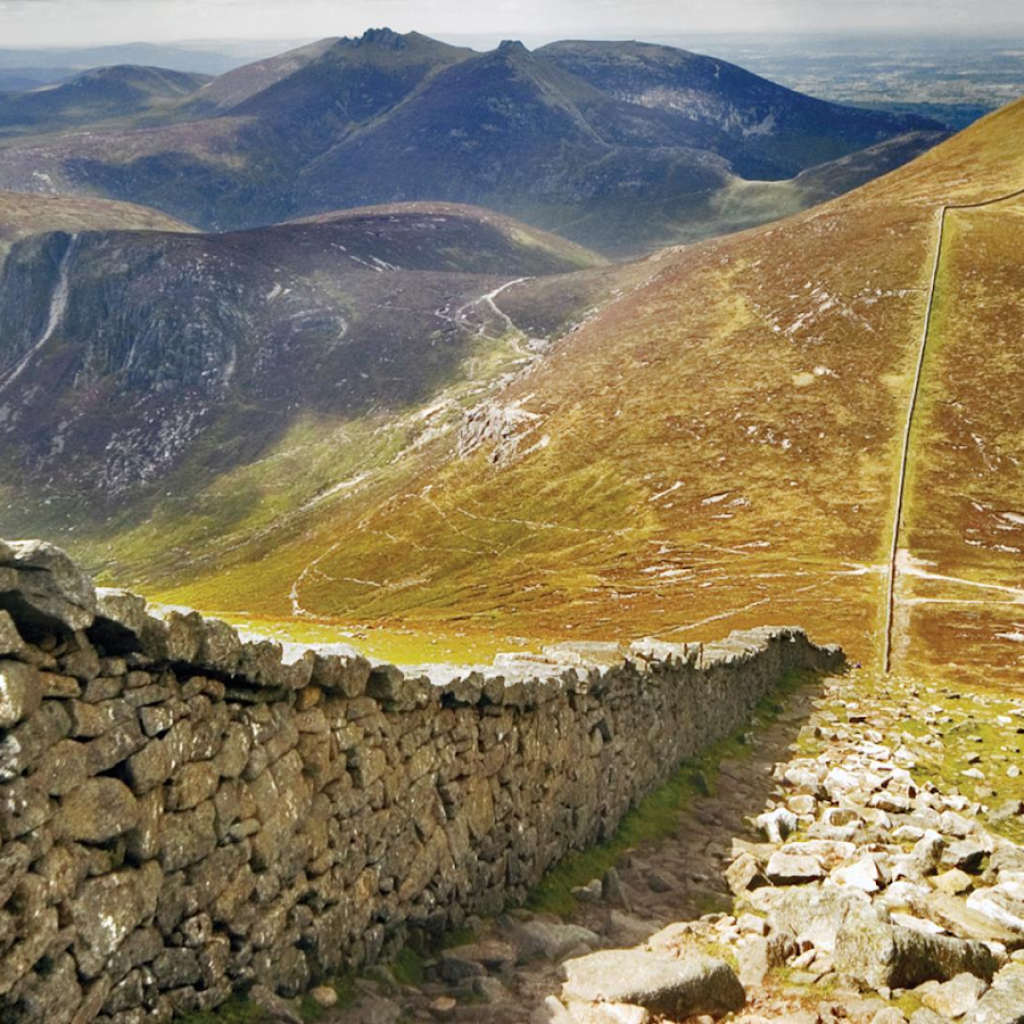
Following local tradition, I carried a stone from the bottom to place at the summit cairn. I completed this challenging ascent and descent (estimated at 6.5 miles) in approximately 4 hours and 45 minutes.
| Trail Overview | Details from My Trip |
| Distance Covered | ~6.5 miles (Estimated return loop) |
| Surface | Well maintained, but rocky in places. Expect some mud and less stable footing after rain. |
| Climbing | Sustained ascent to the highest point in Northern Ireland (Strenuous effort). |
| My Time | 4 hours 45 minutes (Including summit break). |
| My Rating | Strenuous, due to elevation gain and potential wind exposure. |
| Features | Northern Ireland’s highest point, Mourne Wall, Irish Sea views, and summit cairns. |
Getting There: Transport and Timing
Access to the trailhead is primarily via the town of Newcastle. I planned for an early start due to the trail’s popularity.
Driving and Parking Details
Driving is the most direct way to reach the starting point.
- Parking Situation: Parking facilities at Donard Car Park are available, but note that the area will be popular on weekends.
Public Transport Details
- Bus/Coach: Regular public transport links Newcastle to other major cities, but further local transport may be needed to reach Donard Park.
Comparative Travel Table
| Transport Method | My Estimated Time from Belfast City Centre | My Cost | Notes |
| Car (Driving) | 1 hour 15 minutes | Parking Fee + Fuel | Most direct way to reach Donard Car Park. |
| Bus/Coach | 2 hours 15 minutes | Standard Fare | A slower but reliable route to the Newcastle area. |
Driving provides the most convenient access to the start of this challenging mountain hike.
Beyond the Path: Mythology, Safety, and Essentials
The mountain’s rich history and exposed environment necessitate careful preparation.
Mythology and Heritage Knowledge
- Highest Peak: Slieve Donard is the tallest peak of the Mourne Mountains and Northern Ireland’s highest point.
- Legends: The peak is steeped in mythology and folklore. Figures like Slangha and Boirche are connected to its past. Later, Saint Donard, a disciple of St Patrick, became a hermit on the peak, giving his name to the site.
- Pilgrimage: People would ascend the mountain as part of an annual pilgrimage until the 1830s, a tradition which may have begun as a harvest ceremony.
Safety and Essentials Knowledge
- Supplies: Because there are no facilities along the journey, it is necessary to bring water and food. The mountain’s remote nature requires self-sufficiency.
- Clothing: It is often windy on the way, so bringing clothing that suits the conditions (waterproof and warm layers) is vital for safety.
Pets and Tradition
- Dogs: Dogs are welcome and four-leggeds used to routes with inclines will very much enjoy it.
- Tradition: The local tradition calls for bringing a stone from the bottom and placing it at the top, at the cairn.
Post-Trail Treats: Views and Local Vibe
The immense views from the summit and the atmosphere of the coastal town of Newcastle provide the perfect post-hike reward.
On-Site Dining Focus
- My Venue: I relied on packed food and water consumed at the summit.
- My Choice: A sandwich and hot drink enjoyed while overlooking the Irish Sea. This was free.
- Vibe: A solemn atmosphere of accomplishment, shared with other climbers who made the ascent.
Cultural Tourism Focus
- Highest Point: Reaching the tallest peak of the Mourne Mountains is a major piece of regional tourism and mountaineering heritage.
- Views: The spectacular views over the Irish Sea are the primary visual reward of this mountain explore.
Quiet Corners: Insider Tips for a Better Visit
My explore of Slieve Donard yielded practical details for successfully summiting this iconic peak.
- CRUCIAL Supply Tip: Because there are no facilities along the journey, it is necessary to bring water and food.
- Gear: Ensure you wear suitable footwear such as boots or sturdy walking shoes. The path is rocky in places and subject to mud and less stable footing after rain.
- History: Look for the ruins of two ancient burial cairns on the peak, connecting you to the mountain’s mythological past.
- Timing: Arrive early, especially on weekends, as the area will be popular.
Frequently Asked Questions (FAQ)
What is the historical and religious significance of Slieve Donard?
Slieve Donard is the tallest peak of the Mourne Mountains and Northern Ireland’s highest point. It has a long history of mythology and folklore, and it is said that Saint Donard, a disciple of St Patrick, became a hermit there. People performed an annual pilgrimage until the 1830s.
What path features define the trail and what footwear is required?
The trails are well maintained but the path is rocky in places. You should expect some mud and less stable footing after rain. Therefore, suitable footwear such as boots or sturdy walking shoes is necessary.
What unique man-made structures and views can be seen from the summit?
From the summit, you can see the Mourne Wall, which connects to a tiny stone tower at the top. You can also observe the ruins of two ancient burial cairns and enjoy spectacular views that overlooks the Irish Sea.
What essential provisions and clothing should I bring due to the lack of facilities?
Because there are no facilities along the journey, it is necessary to bring water and food. You should also bring clothing that suits the conditions as it is often windy on the way.
Is the mountain suitable for dogs, and what local tradition can I participate in?
Dogs are welcome and those used to routes with inclines will very much enjoy it. The local tradition suggests bringing a stone from the bottom and placing it at the top, at the cairn.
Banking the Memories: Why I’ll Return
The Donard Park to Slieve Donard trail was a demanding but immensely satisfying mountain hike. Reaching Northern Ireland’s highest point and standing by the Mourne Wall while looking out over the Irish Sea was a spectacular piece of outdoors activities. The mountain’s deep history and the tradition of placing a stone at the cairn gave the climb unique resonance. I will definitely return to this majestic peak, perhaps to explore another of the Mourne Mountains.


Comment (0)